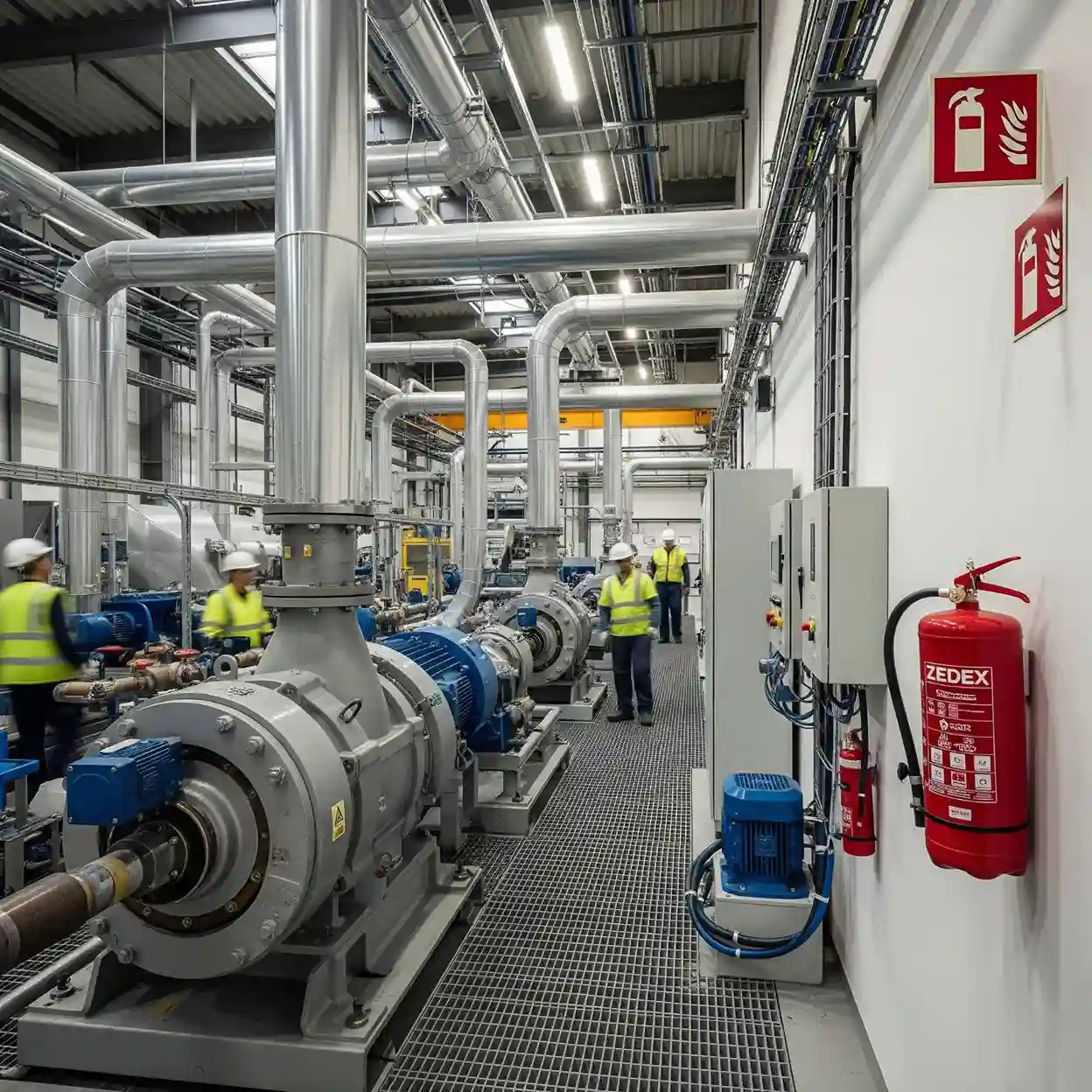
Fire extinguishers are essential safety equipment for Indian homes and businesses because they help control small fires before they spread, provided the correct extinguisher is used safely. Understanding fire extinguisher types and uses helps people choose suitable equipment for kitchens, offices, factories, shops, and other properties.
At Zedex Fire Services, we understand that effective fire safety starts with awareness and the right equipment. From selecting a suitable fire extinguisher to understanding how it works and when it should be used, knowing the basics can make a significant difference during an emergency.
Whether you are a homeowner, business owner, facility manager, or safety professional, this guide explains the different types of fire extinguishers, their applications, and the essential precautions everyone should know.
A fire can start unexpectedly due to electrical faults, cooking accidents, flammable materials, or equipment failures. Without suitable fire protection equipment, even a small fire can spread quickly.
A correctly selected and maintained fire extinguisher can help control an early-stage fire when conditions are safe and the user is trained.
Fire extinguishers are important because they can help:
However, a fire extinguisher is not a substitute for evacuation, fire detection systems, or professional firefighting services. People should never attempt to fight a fire that is spreading rapidly or blocking their escape route.
Different fire extinguishers use different extinguishing agents. Each type is designed for particular fire hazards, so selecting the correct one is essential.
The most common fire extinguisher types include ABC dry powder, CO₂, foam, water, and wet chemical extinguishers.
ABC dry powder extinguishers are commonly used in Indian homes, offices, shops, and industrial facilities because they can protect against several types of fire hazards.
They generally use a dry chemical powder that interrupts the combustion process.
Common applications:
ABC extinguishers are suitable for many Class A, B, and C fires under the Indian fire classification system, subject to the product’s approved rating.
They may also be suitable for certain electrical fire risks, depending on the product’s certification and instructions.
One limitation is that dry powder can leave residue that may damage sensitive equipment or create cleanup difficulties.
Carbon dioxide, or CO₂, extinguishers are commonly used where electrical equipment and certain flammable liquids present a fire risk.
They release carbon dioxide, which helps reduce the oxygen available to sustain combustion.
Common applications:
CO₂ extinguishers generally leave no powder residue, making them useful around suitable electrical equipment.
However, they are not suitable for every fire hazard. Their effectiveness can be limited in outdoor or windy conditions, and they present an asphyxiation risk in confined spaces.
Foam extinguishers are commonly used for suitable ordinary combustible materials and flammable liquid fires.
The foam helps form a layer over the burning material, helping suppress the fire and reduce the release of flammable vapours.
Common applications:
Foam extinguishers should not be used on energised electrical equipment unless the product is specifically rated and approved for that application.
Water extinguishers are primarily designed for Class A fires involving ordinary combustible materials.
They work by cooling the burning material and reducing its temperature below the point at which combustion can continue.
Common applications:
Water extinguishers must not be used on energised electrical equipment or flammable liquid fires. Using the wrong extinguisher can make the situation significantly more dangerous.
Wet chemical extinguishers are designed primarily for fires involving cooking oils and fats.
They are particularly important in commercial kitchens, restaurants, hotels, and food preparation areas.
Common applications:
The extinguishing agent helps cool the burning oil and form a layer that reduces the risk of the fire reigniting.
For homes, businesses, and kitchens, the extinguisher should always be selected according to the specific fire hazards present.
Choosing the correct extinguisher starts with identifying the type of material that is burning.
In India, fire classifications differ from some international systems. For example, Class C refers to gaseous fires under Indian classification, while Class E covers electrical fires.
| Fire class | Type of fire | Common extinguisher options |
| Class A | Wood, paper, textiles, and other ordinary combustibles | Water, foam, ABC powder |
| Class B | Flammable liquids such as petrol and certain solvents | Foam, CO₂, suitable dry powder |
| Class C | Flammable gases such as LPG | Suitable dry powder, where appropriate |
| Class D | Combustible metals | Specialised Class D extinguishing agents |
| Class E | Energised electrical equipment | Suitable CO₂ or approved non-conductive agents |
| Class F | Cooking oils and fats | Wet chemical |
The correct extinguisher depends on the fire classification, the equipment’s approved rating, and the specific conditions of the location.
For example, a commercial kitchen may need a wet chemical extinguisher for cooking oil fires, while an office with electrical equipment may require suitable CO₂ or other approved extinguishers.
Every home has different fire risks. A kitchen, electrical distribution board, storage room, and parking area may each require different fire protection considerations.
Before purchasing a fire extinguisher for your home, consider the following:
A suitable multipurpose ABC extinguisher may be appropriate for certain household fire risks, but it is not a universal solution for every type of fire.
Businesses often have a wider range of fire hazards than residential properties.
An office may contain electrical equipment, furniture, paper, and storage materials. A factory may also involve machinery, flammable liquids, or specialised industrial processes.
When choosing fire extinguishers for a business, consider:
A fire risk assessment can help determine the type, number, size, and placement of extinguishers required for a particular property.
For businesses in Delhi NCR and other parts of India, selecting appropriate equipment is an important part of developing a reliable fire safety arrangement.
A fire extinguisher should only be used when the fire is small, the correct extinguisher is available, and the person using it has a safe escape route.
In an emergency, remember these essential steps:
Many extinguishers use the PASS technique:
This technique is not appropriate for every extinguisher type, so always follow the equipment’s operating instructions and training.
Never use water on burning oil or energised electrical equipment. Do not attempt to fight a fire that is spreading, producing heavy smoke, or threatening your escape route.
A fire extinguisher may appear to be in good condition but still fail to operate correctly during an emergency.
Regular inspection and maintenance help identify problems before they affect the equipment’s performance.
A fire extinguisher maintenance programme should include:
Inspection and maintenance should follow applicable Indian standards, manufacturer instructions, and the requirements of the particular property.
Fire extinguishers are an important part of fire protection, but a complete fire safety arrangement may require additional equipment.
Depending on the property and its fire risks, businesses and residential buildings may also need:
A coordinated fire safety arrangement helps occupants detect an emergency, evacuate safely, and support firefighting efforts.
The most suitable extinguisher depends on the fire hazards present. An ABC dry powder extinguisher may be appropriate for many household risks, but kitchens, electrical equipment, and other specific hazards may require additional or different protection.
CO₂ extinguishers and other approved non-conductive extinguishing agents are commonly used for suitable electrical fire risks. Always check the extinguisher’s rating and instructions before use.
A CO₂ extinguisher may be suitable for certain electrical equipment and flammable liquid fires, but it is not the appropriate choice for a cooking oil or grease fire. A suitable wet chemical extinguisher is generally used for those hazards.
Fire extinguishers should be inspected and serviced according to applicable standards, manufacturer instructions, and the requirements of the property. The correct schedule depends on the extinguisher type and its operating conditions.
Fire extinguishers should be installed in accessible, clearly identified locations that are appropriate for the fire hazards present. Their placement should not obstruct escape routes and should comply with applicable requirements.
Choosing the right fire extinguisher is an essential step towards creating a safer home, workplace, or commercial property. Understanding different fire extinguisher types and uses, identifying potential fire hazards, and maintaining equipment regularly can make a significant difference during an emergency.
At Zedex Fire Services, we believe that fire safety is about more than having the right equipment. It is about helping people make informed safety decisions and ensuring that suitable fire protection measures are in place when they are needed most.
From residential properties to industrial facilities, every building deserves a fire safety arrangement that meets its specific requirements. With the right equipment, proper maintenance, and a commitment to safety, we can work towards protecting lives, property, and businesses across India.