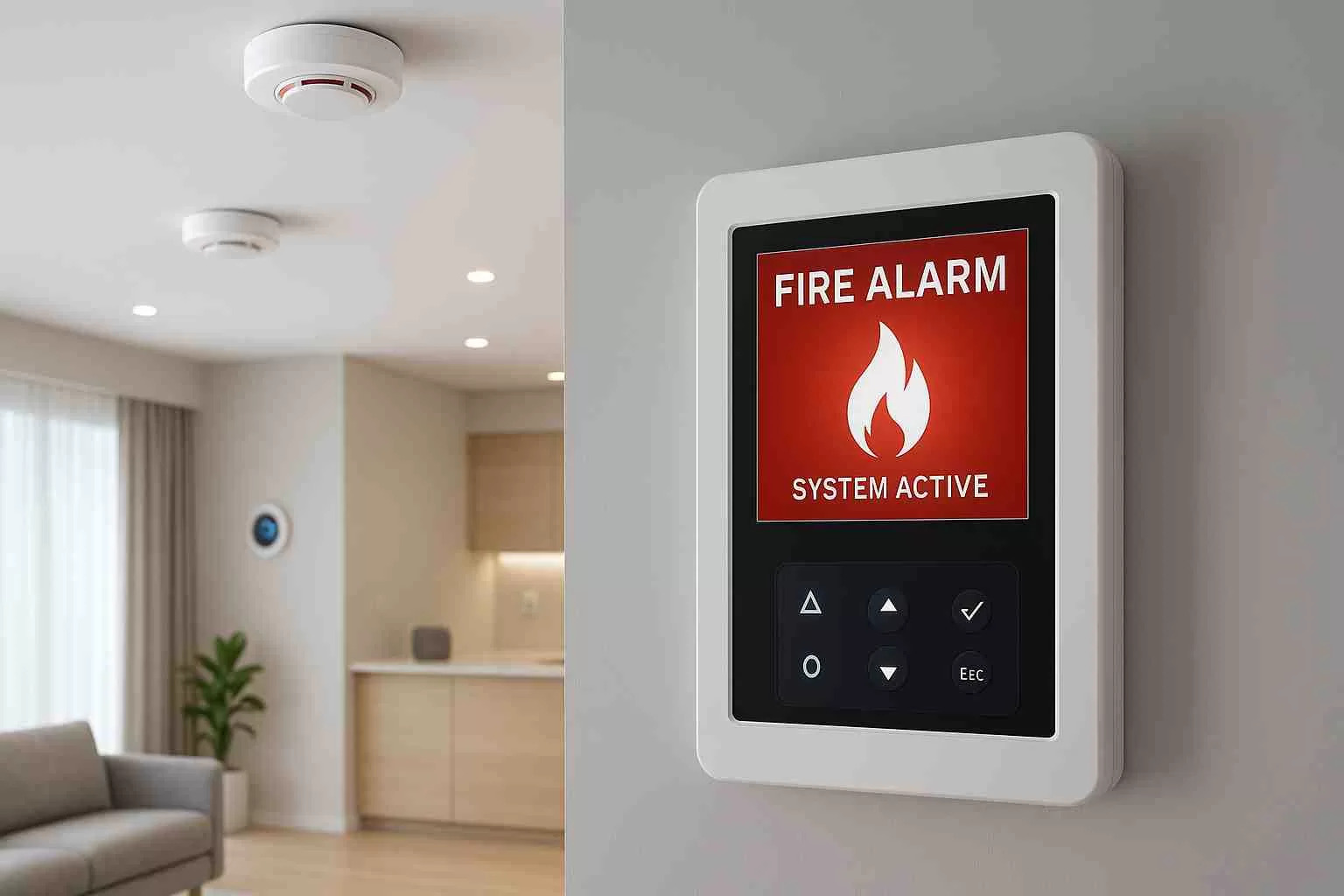
A fire alarm system detects signs of a possible fire and alerts people so they can respond quickly. Depending on its design, it may use smoke or heat detectors, manual call points, a control panel, and audible or visual warning devices.
For offices, residential buildings, commercial properties, and industrial facilities in Gurugram, the system should be selected according to the building’s layout, occupancy, fire risks, and applicable requirements. Zedex Fire Services supports fire safety equipment and services, including fire alarm systems.
The system monitors designated areas for signs of fire. When a detector or manual call point sends a signal, the control panel processes it and activates the appropriate warnings.
The sequence is straightforward:
Some systems can also be connected to other building equipment. Any such integration should be planned and tested as part of the overall design.
The building’s size, layout, and operational needs help determine which type of system is suitable.
Conventional systems divide a building into zones. When an alarm activates, the panel identifies the zone where the signal originated. This can be appropriate for some smaller or simpler premises.
Addressable systems assign individual addresses to compatible devices. The control panel can identify the specific device reporting an alarm or fault, which may help locate the source in larger or more complex buildings.
Wireless systems may also be considered in some settings, particularly where installing cables is difficult. Suitability depends on the building conditions, signal coverage, and system requirements.
A fire alarm system should be designed for the site rather than selected from a generic equipment list. Detector placement, warning devices, and control equipment all need to reflect how the building is used.
Planning may consider:
A qualified professional should assess the site and determine the appropriate system design.
A fire alarm system may include several connected components:
The specific equipment and configuration depend on the system design and the conditions in the building.
Installation should follow the approved design, manufacturer instructions, and site requirements. It may involve fitting the control panel, detectors, manual call points, notification devices, and cabling or communication equipment.
Before handover, the system should be inspected, tested, and commissioned. Testing should confirm that devices communicate with the panel and that alarms and relevant integrations operate as intended. The building’s responsible personnel should receive operating information and instructions for responding to alarms and faults.
Installation and commissioning should be carried out by competent personnel.
A fire alarm system needs regular inspection and testing, even when no alarm has occurred. The maintenance plan should follow the equipment instructions, approved design, and applicable requirements.
Routine checks may include:
Repeated false alarms or unresolved faults should be investigated. They should not be ignored or dealt with by disabling the system without an appropriate assessment.
A fire alarm system warns people; it does not itself extinguish a fire. Depending on the building’s needs, it may be coordinated with other fire protection measures, such as fire sprinkler systems or suitable fire extinguishers.
These systems have different purposes. Their selection and coordination should be based on the site’s risks, applicable requirements, and emergency procedures.
When comparing fire alarm system providers, look for a clear explanation of the proposed design and equipment. Ask how the system will cover the building, how installation and commissioning will be managed, and what inspection and maintenance support is available.
It is also useful to confirm that the handover includes system documentation, operating guidance, and information about how to report faults or arrange servicing.
A fire alarm system can provide an important early warning, but its value depends on suitable design, correct installation, reliable operation, and regular maintenance. The system should reflect the building’s actual risks and support a clear response plan.
Zedex Fire Services supports fire safety equipment and planning for properties in Gurugram. A site-specific assessment can help establish the right fire alarm approach for the building and its occupants.